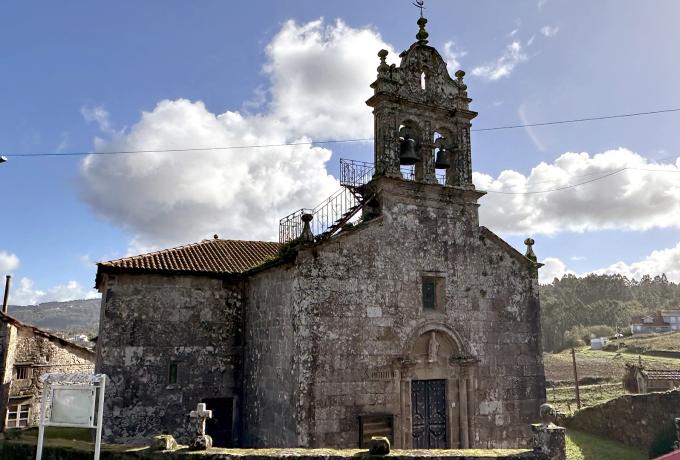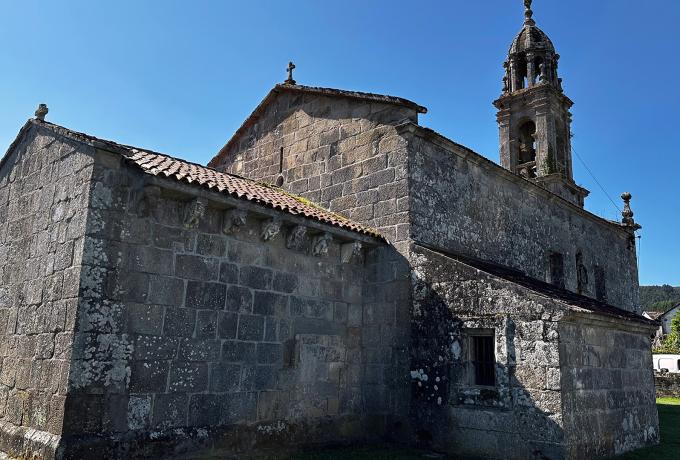


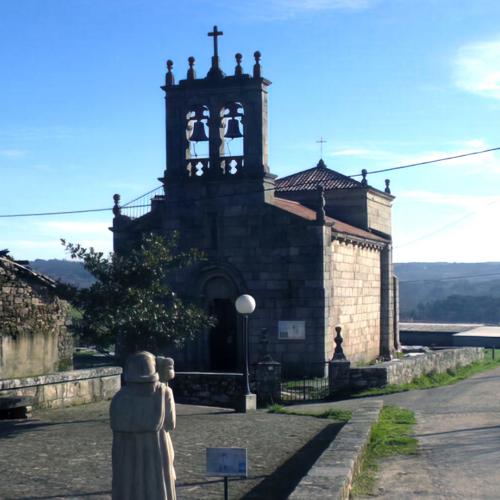
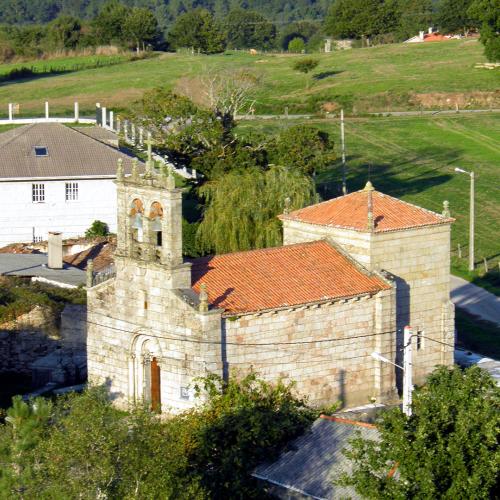


The church of Santiago de Taboada is a notable example of transitional Romanesque architecture built in the early 13th century in honor of the apostle. The building, with a rectangular plan and an almost square chancel, is located next to the route of the Vía de la Plata of the Camino de Santiago, reinforcing its connection to the pilgrim tradition. The parish has long been known for the bridge that connected the lands of Deza and Trasdeza, a key element in local history.
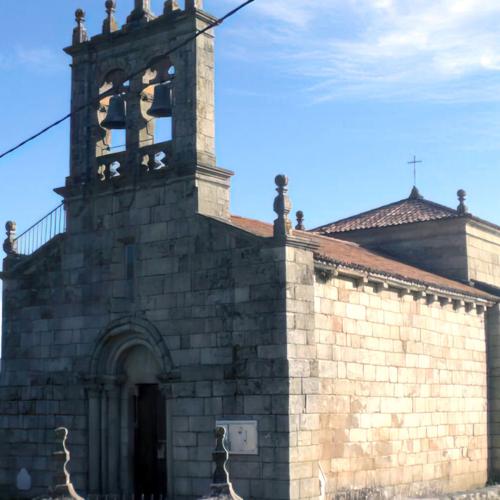
Inside, the nave is separated from the chancel by a semicircular arch supported by half-columns decorated with vegetal motifs. The chancel is covered by a vault and reinforced by similar arches. On the exterior, the side walls display twelve corbels on each side and simple buttresses at the ends. The square apse is decorated with a Romanesque window, while the sober and balanced façade is crowned by an 18th-century Baroque bell tower with two levels topped by pinnacles.
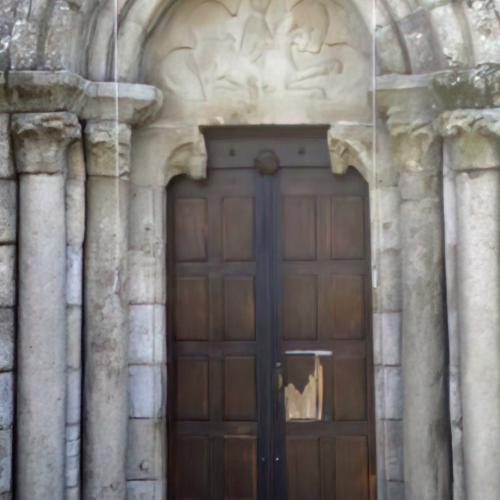
One of the most remarkable artistic features of the church is found in its main portal. It consists of an archivolt supported by columns and resting on two elements decorated with bovine heads. The tympanum features a relief of Samson fighting the lion, a theme widely represented in the art of pilgrimage routes. Inside, there is also a Baroque altarpiece with polychrome figures that includes a depiction of the Battle of Clavijo. The church also preserves its 18th-century sacristy, several Romanesque windows and arrow slits, and maintains a curious local tradition that invites pilgrims to knock on the door with their heads as they pass, a symbolic gesture that reflects the deep connection between this temple and the historic pilgrimage route.