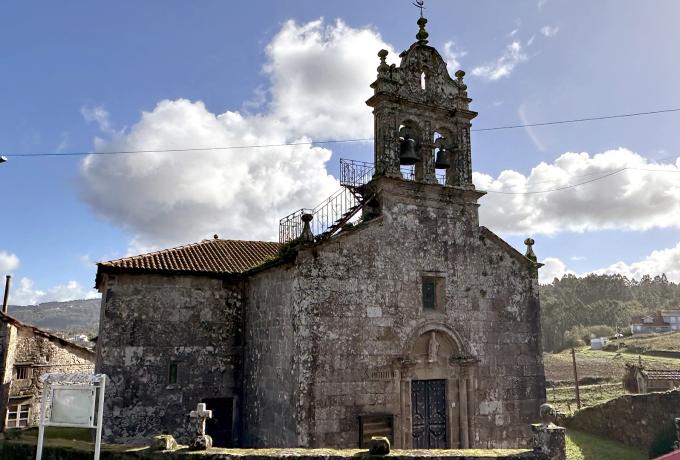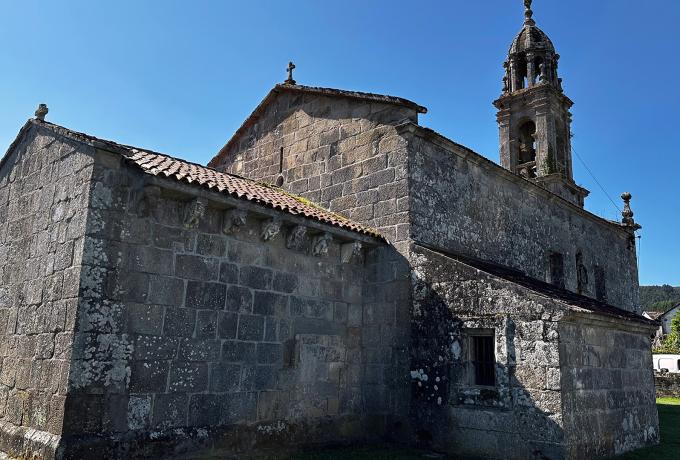


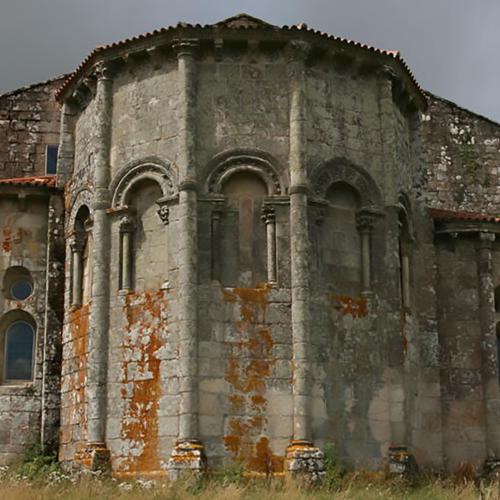






The Monastery of Santa María de Aciveiro is one of the most important historical and heritage landmarks in the municipality of Forcarei and the Terra de Montes region. It was founded on 4 February 1135, according to an inscription preserved in the building itself, under the patronage of King Alfonso VII, and was incorporated into the Cistercian Order around the year 1170. Since the Middle Ages, it has been considered one of the most important monasteries in the Diocese of Santiago, exerting significant religious, economic and cultural influence throughout the surrounding territory.
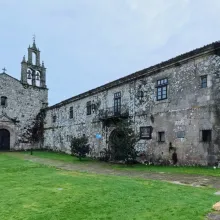
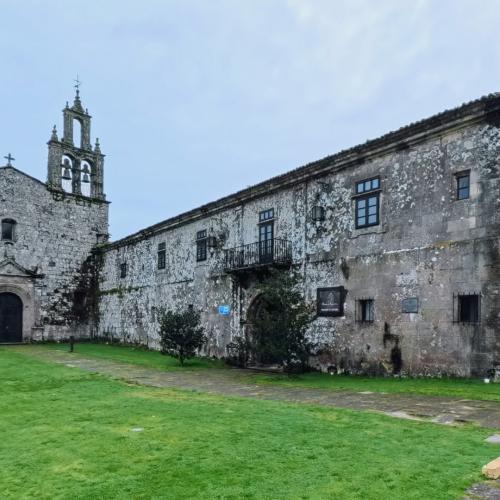
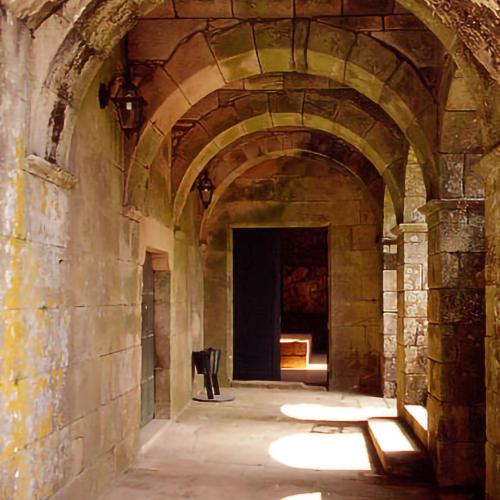
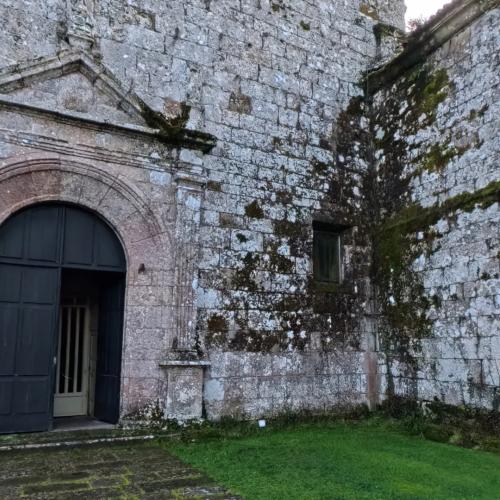
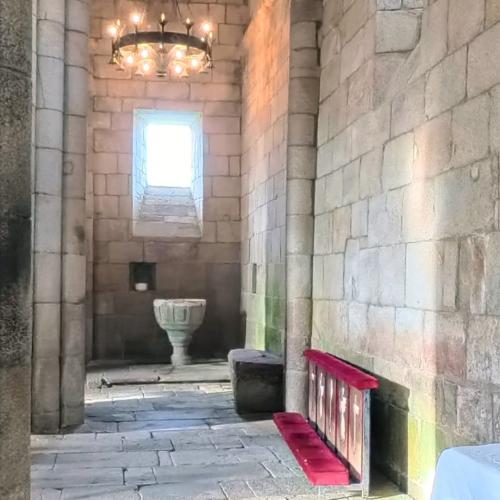
The monastic complex displays a solid and austere architecture typical of the Cistercian spirit, organised around several cloisters and monastic buildings. Facing the main square, the masonry walls rise, built in different historical phases, with few openings at ground level and larger windows in the upper levels, where the monks’ former cells and rooms were located. The processional cloister is particularly noteworthy, the best preserved of the complex, with a quadrangular layout, crowned by a classical cornice with gargoyles and dated between 1760 and 1769, the work of the master stonemason Juan de la Fuente. Inside, several spaces of great interest are preserved, such as the chapter house, the former library and archive, the pilgrims’ hostel, the vaulted stables, and especially the monastic kitchen, completed in 1801, considered one of the most distinctive and best preserved parts of the monastery.
Throughout its history the monastery was expanded and renovated, particularly during the 17th and 18th centuries, while maintaining its functional and self-sufficient character, with ovens, granaries, orchards and water-supply systems. After the 19th-century disentailment (Desamortización), the monastery lost its religious function, although its heritage value was recognised early when it was declared a Historic-Artistic Monument in 1931, a status now equivalent to Asset of Cultural Interest (BIC).
Today the Aciveiro Monastery operates as a Hotel-Monument, a restoration that has allowed the preservation and enhancement of one of the most important monastic complexes in Galicia.