



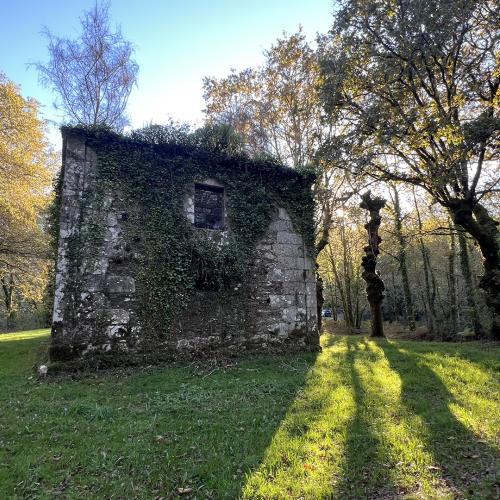

The Hermitage of San Amaro is located in the place of Seoane, within the parish of Meavía (San Xoán) in the municipality of Forcarei. Its location is linked to ancient historical routes, such as the Camiño Vreeiro or Camiño dos Arrieiros, which connected territories of inland Galicia and possibly have very ancient origins, traces of which are still preserved today. The place name Meavía itself seems to derive from media vía (“halfway”), referring to an intermediate point along the route. This reinforces the hypothesis of its connection with traditional transit routes and even with secondary branches of the Way of Saint James, which may explain the dedication of the chapel to Saint Amaro.
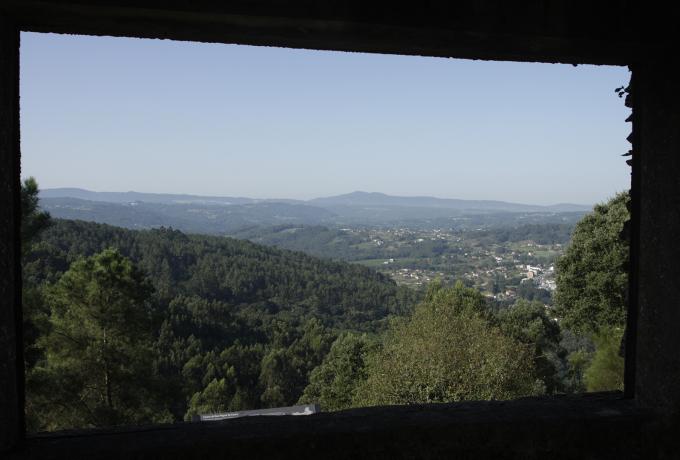
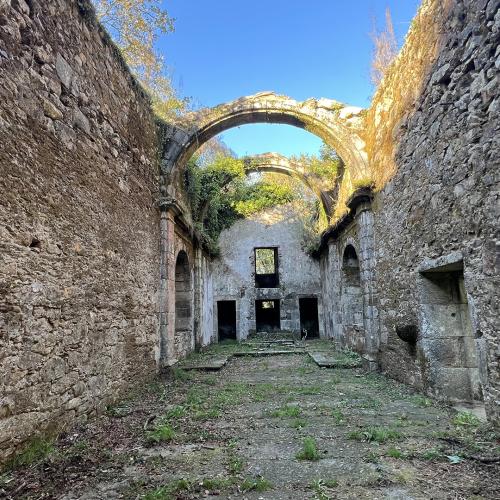
The remains of the hermitage stand on a small mound within a meander of the Umia River, which flows a short distance below the building, enhancing the scenic character of the site. Today the perimeter walls, arches and part of the wooden beams that supported the roof—which collapsed in the 19th century—are still preserved. Although the exact date of its abandonment is unknown, the Madoz Dictionary of the mid-19th century still mentions the hermitage without referring to its ruin, suggesting that its final deterioration occurred later. Based on its construction features, it is believed that the chapel was built in the 17th century, possibly incorporating later alterations, and there is a local tradition that it was erected on the site of an earlier hermitage, of which no identifiable remains have survived.
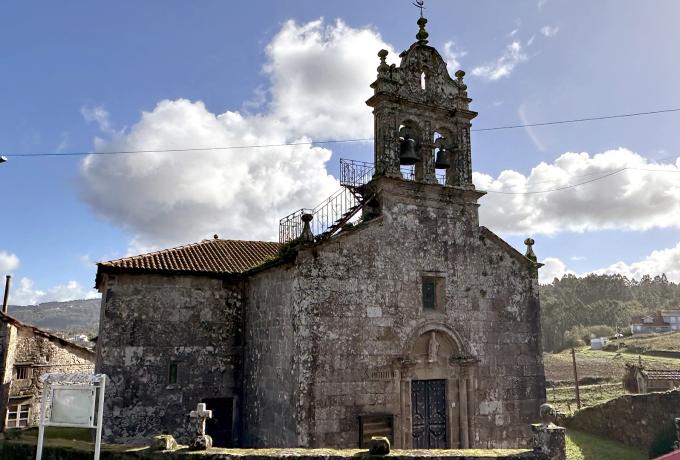
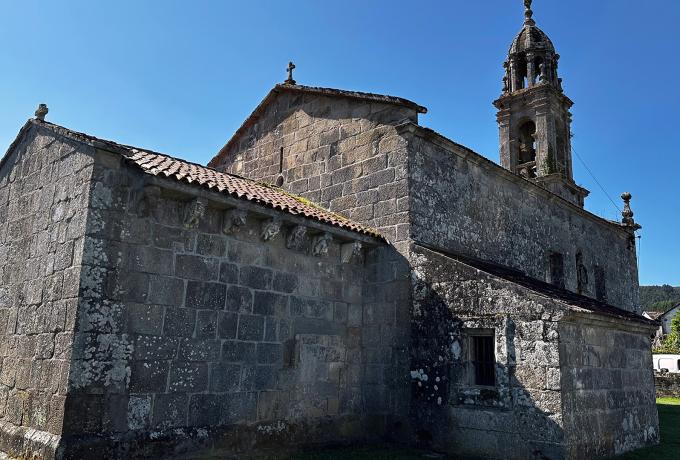
Architecturally, it is a single-nave church, built with ashlar and rubble masonry. The façade features a lintelled doorway beneath a splayed window, and it probably originally had a small bell gable for the bell. The exterior decoration is very simple, although on the southern wall there is a secondary doorway and two windows, elements that are repeated in the rectangular apse. Behind the altar is the sacristy, which was accessed by side staircases, and traces of mural paintings are still visible inside. Today the semi-ruined complex retains an atmosphere of silence and memory, allowing visitors to imagine the importance this place once had along the historic routes of inland Galicia.