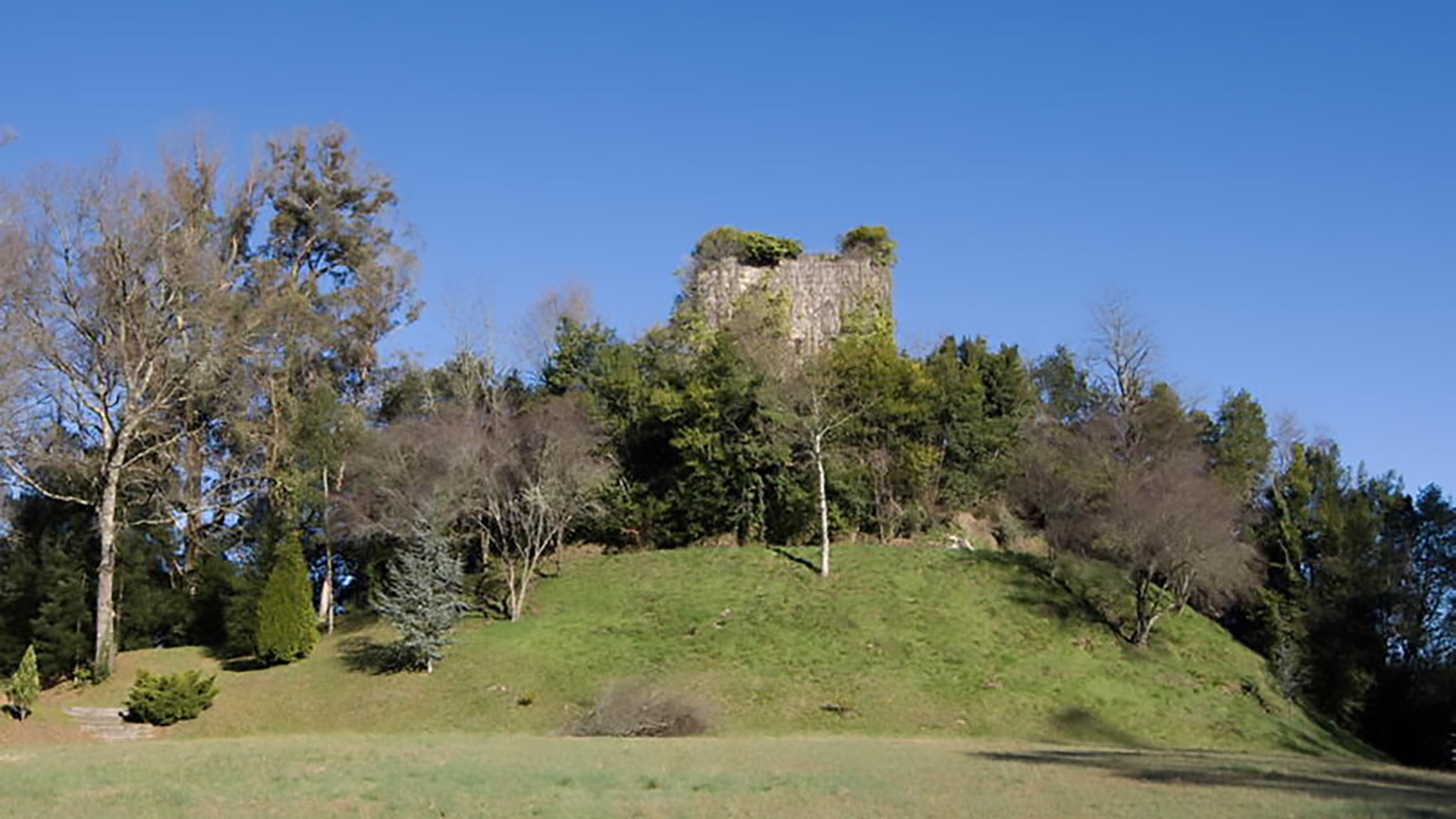


The Cira Tower, located in the parish of the same name, is a medieval construction that stands on a strategic promontory at the confluence of the Deza and Ulla rivers. Rectangular in plan, it preserves a slightly pointed opening with large wedge-shaped stones and another lintelled opening with a relieving arch, reflecting the solidity and defensive character typical of medieval noble towers. Today the tower is surrounded by a tree-filled estate, belongs to private property, and is not open to visitors.
Traditionally attributed to Bernardo Xoán de Deza, the tower played an important role in the conflicts of the 12th century. Bernardo himself was captured by Queen Urraca, who used the fortress as a base of operations during her confrontation with Archbishop Gelmírez, illustrating the political and military importance that this stronghold once held. The tower thus became a setting for the tensions between the nobility and ecclesiastical power, linked to the control of territory in medieval Galicia.
Like many Galician fortresses, the tower was destroyed during the Irmandiño revolts of 1467. Today only remains of the structure survive, integrated into the surrounding rural landscape and recalling its former strategic significance. Despite its current condition, the Tower of Cira retains strong historical and landscape value, allowing visitors to recognise the mark of the medieval past in this strategic point of the territory.